Hennie Knoester is retiring. For many years, she has dedicated herself to chronic and (pediatric) palliative care.
Hennie Knoester, a pediatric intensivist at the AUMC/Emma Children's Hospital, believes and acts based on the connection between intensive care practices and their long-term results. She prefers to collaborate with people who recognize opportunities and the importance of thinking ahead. Her farewell symposium, titled "Long-Term Care, Chronic Care, and Palliative Care in Pediatric Intensive Care," took place on September 7, 2023. This event marked the end of a 40-year career, in which her passion for children with chronic illnesses served as a common thread.
Hennie reflects on her career and concludes: "Over the past 40 years, the intensive care profession has changed, and I'm glad I've contributed to that. If I were asked to describe my ideal career path today, I would follow exactly the same path." She emphasizes that she comes from a time when everyone was happy when a child survived and was able to leave intensive care. But that's no longer enough. She quickly realized that children's lives continued after leaving the hospital. She looked beyond short-term medical treatment and wondered what needed to be done to maximize the long-term quality of life for both the child and the family.
"If it doesn't affect me anymore, I can't do it anymore"
Pediatrics is an intensive specialization, and it's important not to choose it just because you love children. The profession can be demanding; in the pediatric ICU, children undergo invasive treatments. There comes a point for everyone when the burden becomes too much. The loss of a child is so unnatural and causes deep grief. As a pediatric intensivist, it's essential to take good care of yourself and to indicate in a timely manner when you are temporarily unable to provide patient care. But at the same time... if it no longer affects you, you have to stop very quickly.
A good quality of life for the child and the family in the short and long term is important. This goes beyond simply keeping the child alive. Nowadays, much is technically possible, but we must constantly ask ourselves: "Yes, we can do it, but... is it really in the child's best interest?"
I am a real team player
My personal motivation lies in working as part of a team. An idea is born, people join in, the plan begins to take shape and is translated into concrete actions. Collaboration is a natural process for me, one in which you always achieve more and keep moving forward. It inspires me to work with people of different ages, disciplines, backgrounds, and personalities. I see it as my job to give each individual a suitable role, so that everyone can reach their full potential based on their knowledge and skills. Improving your profession is a process that depends on yourself, your teammates, and also on those above you. No matter how good your plans are, you need the support of your managers to realize them. I've been fortunate enough to feel supported and encouraged, which has enabled me to shape my career in my own way.
Collaborating in multidisciplinary teams requires intensive consultation, and the rise of digital platforms like Teams and Zoom has made it much easier to bring different parties together. Initiatives I'm involved in require extensive consultation in the preparatory phase, and in those cases, it's not always possible to meet in person. The coronavirus pandemic has surprisingly helped us and allowed us to realize innovations as a team.
Parents play a crucial role
Effective communication is paramount if you want to provide optimal care for a child. To achieve this, the involvement of all parties is essential. These stakeholders must be connected and listen carefully to each other. Parents play a crucial role in the process, and I believe it's crucial that they fully participate in the care team. They are an important source of information and our discussion partners. Their input plays a vital role in the quality of care we provide.
Communicating with parents requires a different approach than direct communication with an adult patient and requires different communication skills. This can be challenging, but it's also what makes it so challenging.
Involved in innovative healthcare initiatives with a focus on the long term
One of the initiatives I look back on with satisfaction is the establishment of the ICU Aftercare Clinic. The focus here was on developing a follow-up clinic to identify and treat potential problems early on. This includes post-traumatic stress disorder (PTSD) and behavioral problems, academic and learning difficulties, physical issues, treatment-related complications, and the quality of life of the child and family members after discharge from the pediatric intensive care unit (PICU). We started in Amsterdam and Rotterdam, and now every pediatric ICU in the Netherlands has its own aftercare clinic. Our research has led to the development of a nationally accepted and implemented guideline for aftercare following a PICU stay.
Another valuable initiative I've been part of is the Emma Home Team, the Children's Comfort Team at the AUMC/EKZ. This team provides support to seriously ill children and their families at home. The KCTs consist of medical, nursing, educational, and spiritual experts. They offer support and guidance to the child and family during palliative care and ensure continuity of care even after the child returns home.
Thanks to national collaboration between the KCTs, led by the Pediatric Palliative Care Knowledge Center and the NVK (Dutch Association of Pediatrics), a DBC (Diagnosis Treatment Combination) for pediatric palliative care has been operational since January 1, 2023. This was a significant effort, as new DBCs are not implemented overnight. This new DBC is multidisciplinary and reflects the composition of the KCTs, which is truly innovative. The time investment and associated compensation are thus guaranteed, ensuring continuity of care.
I was also involved in establishing the Jeroen Pit Huis , a transitional care center. Here, families are given the opportunity to be together in a home-like environment and gain a grip on their new life with a chronically ill child. It's an environment where parents are in charge and can prepare for life at home, outside of the hospital setting. After my retirement, I'll remain involved with the Jeroen Pit Huis a few days a week to further develop the care concept and train staff. We're just getting started; the Jeroen Pit Huis has been operational since early 2022 after seven years of preparation.
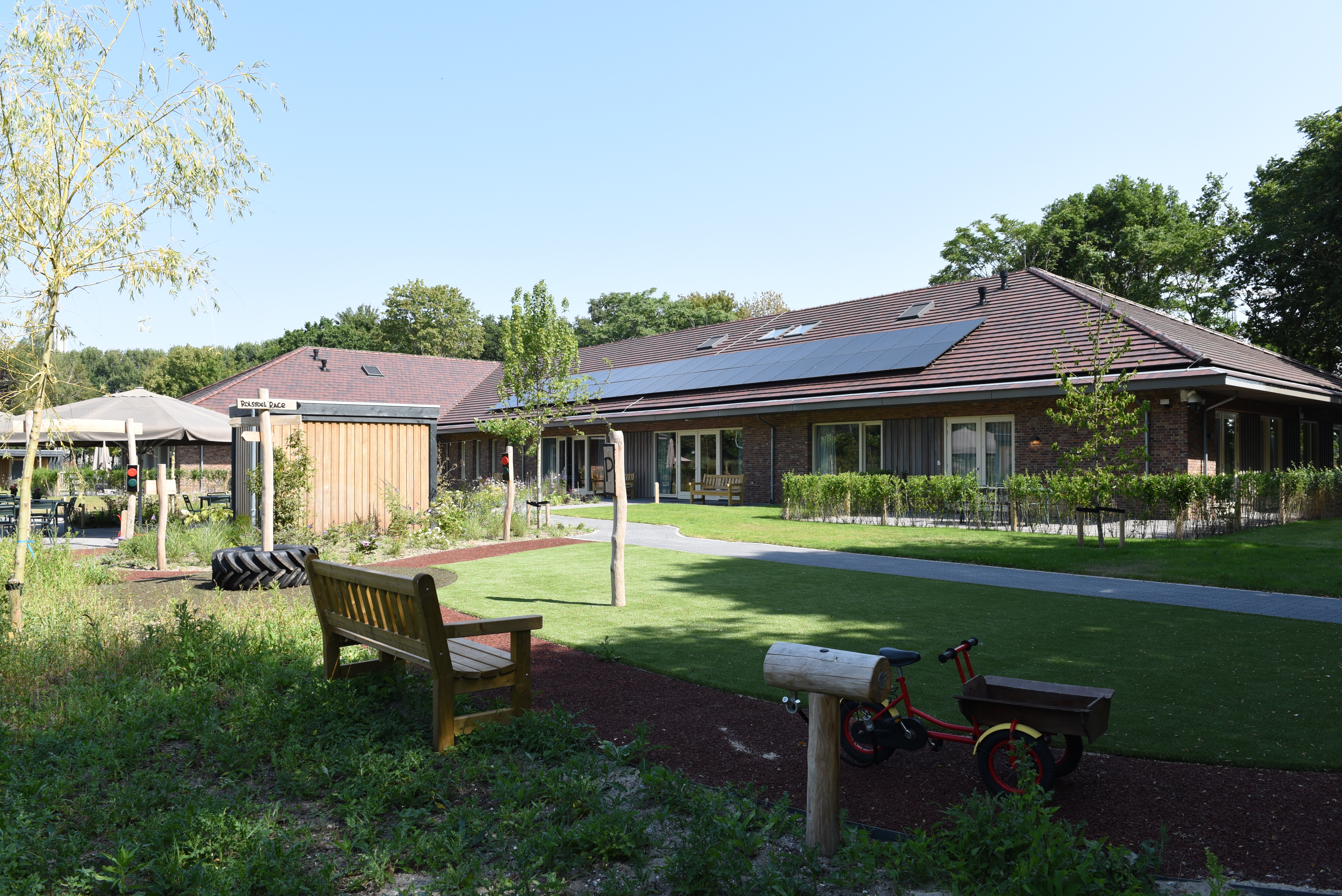
All these initiatives were created thanks to a few enthusiastic pioneers who, through collaboration and connection, were able to take joint steps to improve the quality of care for children with chronic illnesses. As I said before, together we achieve so much more.
I look forward to the next generation of pediatricians
My involvement in academic pediatrics also allows me to work with the new generation of pediatricians. I have great respect for them and their new way of thinking. They naturally have a different approach to the profession and will need to take a broader perspective and collaborate with all disciplines around a chronically ill patient, both in (academic) hospitals and at home. The mindset of physicians is changing. The upcoming cohort is already much better trained to collaborate with patients and their families, and that undoubtedly benefits our profession. Caring for children encompasses more than just medical procedures. Understanding the broader context contributes to the quality of care we can provide.
What advice would I give young doctors? In the dynamic environment of a hospital, interns can sometimes become overwhelmed. It's important to realize that there's no reason to feel intimidated. Asking questions, sharing your doubts, and seeking clarification are signs of engagement and curiosity, and contribute to our shared success. In an intensive care unit, you're never in the way and are absolutely essential, regardless of your educational level!
Challenges for the future
Over the past 40 years, the pediatric ICU has shifted from a focus on acute conditions to a more long-term approach. Vaccination has virtually eliminated life-threatening childhood illnesses like meningococcal disease. Moreover, the growing focus on prevention, such as the use of bicycle helmets, is contributing to a decrease in the number of traffic accidents. Nowadays, the ICU primarily treats chronically ill children, who are surviving longer thanks to increased technical capabilities to treat them. Consequently, the number of chronically ill children growing older has increased, necessitating adult care. This requires close collaboration between pediatricians and adult physicians, for patients who previously did not reach adulthood and often do not fully mature in terms of mental development.
These developments call on us to collectively consider how best to approach this new reality and what adjustments are needed in our healthcare system to continue providing optimal care to children and adults with chronic conditions. A modern intensivist must have a passion for chronic care.
Another challenge is that pediatric palliative care becomes more integrated into society. Parents and siblings of patients play a crucial role in this. After all, parents and those closely involved are the most capable ambassadors. We, as a society and as individuals, must realize that encountering a pediatric ICU, a chronically ill child, or a child in palliative care can affect anyone. The pink elephant we dare not speak about because it seems frightening or far away can unfortunately sometimes unexpectedly come closer. Let us collectively find the courage to have these conversations, to increase empathy and understanding, and to embrace everyone who experiences this with support and compassion. Because only through openness can we together create a community in which every child and every family, regardless of their challenges, feels supported and understood.